
Emotions: A Simple Embodied Practice

Emotions – A Simple Embodied Practice
Emotions are normal; we all have them. From a theoretical perspective, emotions can be complex. For our work here, however, it is important to make things practical. For that reason, I offer a simple (and simplistic) definition of emotions as “body states.”
Emotions are experienced in the body and can be described as physical sensations like warm, cool, tingling, numbness, pressure, and so forth. Describing an emotion with these kinds of neutral words can be a first step in working with them.
Today I want to talk about another step in the process: simple relaxation of the body. Some emotions (like joy or happiness) often result in the body relaxing, but many other emotions such as anger, anxiety, or fear) often bring more tension. Sadness, frequently mixed with other emotions can bring a mixture. And – emotions may bring different body states for different people, so it is important to notice what is happening in your specific body. Yes, for some people, happiness has tension. Simply notice what your body does for a specific emotion.
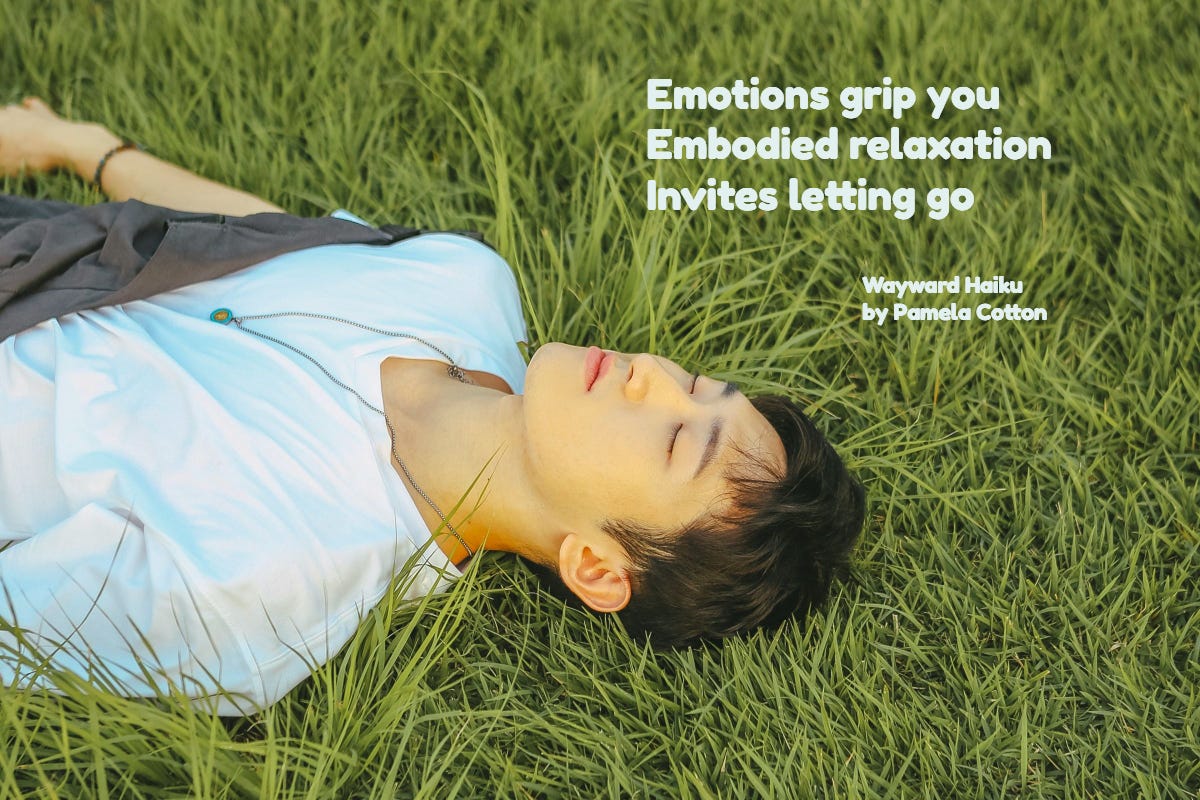
Then allow yourself to experiment with relaxation. What is the impact for you when you consciously relax your body as you notice the body state triggered by the emotion? For me, relaxation tends to create a kind of space around the emotion, allowing room for movement and flow. Sometimes it softens or lessens the emotion, or simply makes more room to use other tools for working with the situation. Simply note what it does for you. Notice the impact on the emotion or emotions as you physically experience them.
I encourage you to explore this simple tool for yourself. Notice what happens in your life, when you are gripped by an emotion, and you consciously allow your body to relax. Just as when you do any mindfulness practice, simply notice.
And I invite you to join me below as we walk through this together.
I would love to know your thoughts and any ideas you have for future posts.
Warmly,
Pamela