
Befriending Discomfort

In many cultures, discomfort is something to be avoided, and the culture provides many opportunities to help you do that. I see it everywhere here in the US. One day, as I was walking into a grocery store, I saw a sign that suggested you eat a certain kind of food so you didn’t have to feel so upset. Yes, it was that direct!
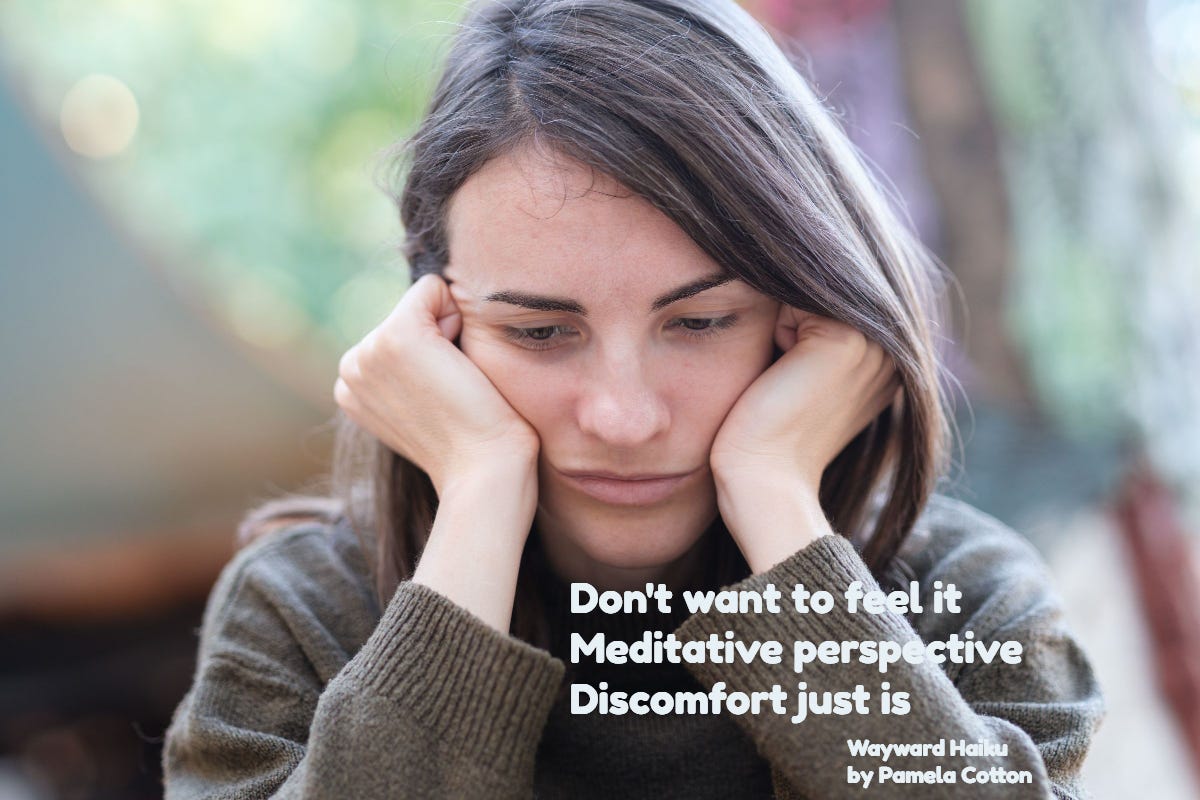
How does this relate to emotions? Emotions, at least several of them like anger, sadness, shame, and even others can feel uncomfortable. Sometimes we use the label “emotional pain.” I can understand that label, but keep in mind that how we label experience impacts how we feel it. What if you labeled it as discomfort, even strong discomfort?
In order to be with and work with emotions, we need to be able to move our attention toward the experience. I define emotions as “body states,” so we are needing to move our attention toward the sensations, be curious about them, and offer self-compassion or work with them to help us move toward resolution.
Here are a couple of ways we can do this:
Set an intent to become curious about emotions when they arise. Begin with small ones like minor disappointment or frustration. Notice it in the body, where you feel it the most, and what it feels like physically (warm, cool, tingling, tension, etc.) When you are ready to stop, put your attention on something that you enjoy.
Make meditation a regular part of your life. Meditation doesn’t stop you from feeling uncomfortable or even painful sensations, but it can help. It shortens the anticipatory pain response and helps that response return to normal faster.
One study compared reactions to hot water exposure between meditators and non-meditators. A sound was played 10 seconds before the exposure, so both groups knew the hot water experience was coming. Both experienced the pain of the experience. The non-meditators had brain changes indicating they were feeling pain as soon as the sound was played, but the meditators didn’t have the brain changes indicating pain experience until the hot water actually happened. After the hot water experience stopped, the meditators’ brains returned to normal faster than the non-meditators. So the meditators had a shorter pain experience. Here is an interesting account of that study.
This work takes time and practice. Experiment with these techniques. Be curious about the process and see what happens.
And please join me in the audio below to explore this process together.
I would love to know your thoughts and any ideas you have for future posts.
Warmly,
Pamela